
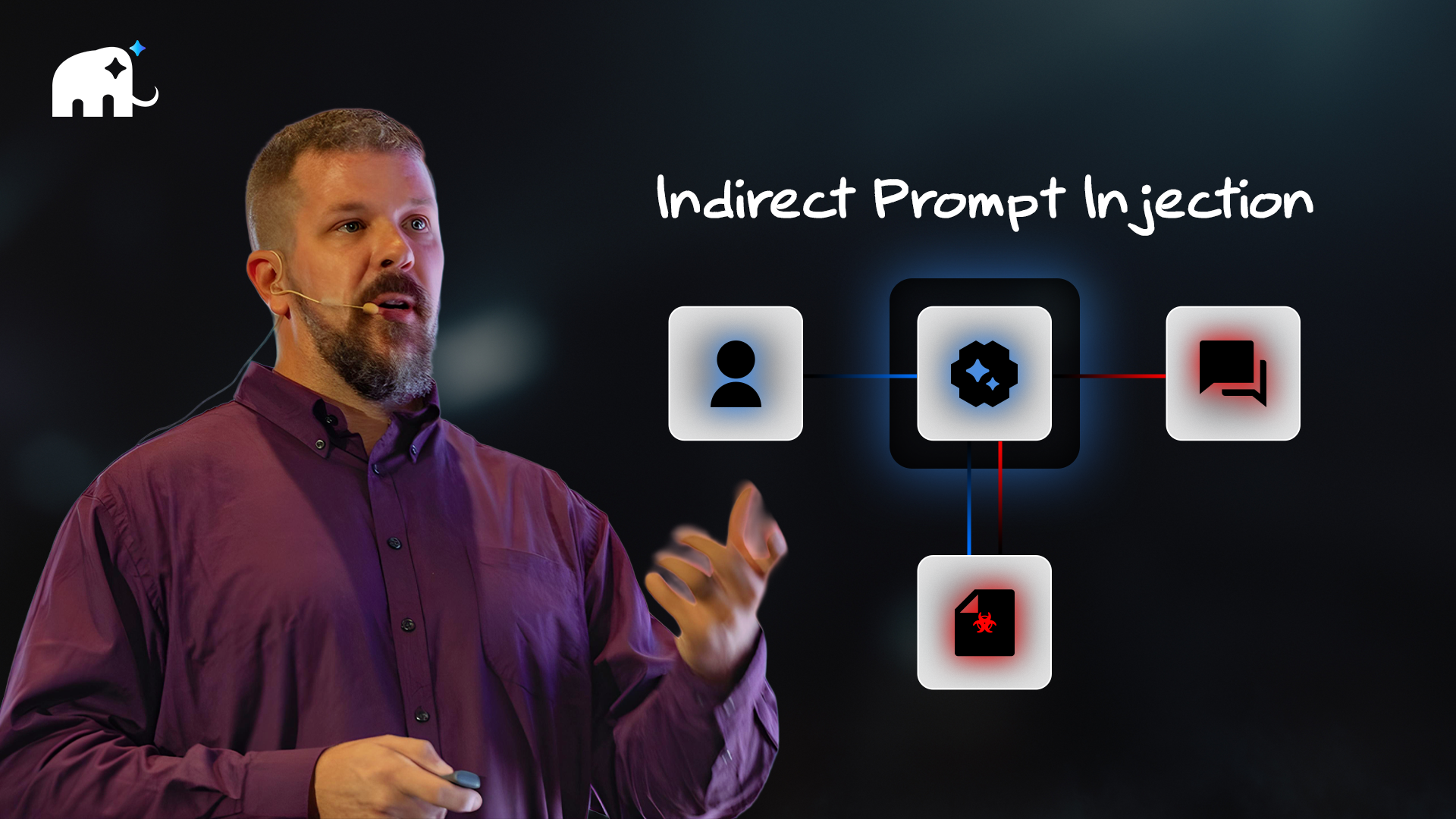
As organizations increasingly adopt browser-based agents, integrated AI capabilities, and enterprise AI browsers, one of the less-visible threat vectors has emerged into sharp focus: indirect prompt injection.
- Editorial,
 Chase Cunningham
Chase CunninghamAs organizations increasingly adopt browser-based agents, integrated AI capabilities, and enterprise AI browsers, one of the less-visible threat vectors has emerged into sharp focus: indirect prompt injection.

That attack worked really well.
It worked so well that researchers are now chaining it to classic web flaws, exploiting the fact that AI agents don’t just “read” the web—they act on it across multiple sites, using your authenticated session and your privileges. That’s a direct punch in the face to the browser isolation model, the whole web has been leaning on for decades.
And once you add persistent AI memory into the mix, you don’t just have a one-off exploit—you have tainted memory that follows the user across tabs, sessions, and even devices.
This post is about that: how indirect prompt injection + cross-site actions + CSRF + persistent memory combine into an attack surface that looks a lot more like “remote control for a privileged automation system” than “just a chat window in your browser.”
Prompt injection is old news at this point. OWASP has it as LLM01 in the GenAI risk list: trick the model into ignoring its original instructions and doing what the attacker wants instead. OWASP Gen AI Security Project
Indirect prompt injection is the nastier cousin. Instead of the attacker typing into the chat box, they:
Now plug that into an AI browser or AI-powered extension that:
You’ve just built an agentic macro engine with admin rights, driven by whatever text it ingests.
That’s the core problem: the agent is no longer constrained by one tab, one domain, one sandbox. It’s orchestrating actions across many contexts at once.
The classic browser security story was:
AI browsers and agentic extensions blow a hole in that mental model:
So even if the low-level browser sandbox is technically intact, the AI agent becomes a cross-origin bridge—the thing we spent 20 years trying to prevent. Acuvity – Gen AI Security Platform+2LayerX+2
Cross-Site Request Forgery (CSRF) has been around forever. The classic pattern:
Now modern AI browsers introduce a new twist: CSRF against the AI backend itself, combined with persistent memory.
Recent research on OpenAI’s Atlas browser showed that attackers could use a CSRF-style weakness to silently inject instructions into ChatGPT’s persistent memory from a malicious site.
Key points from that family of “tainted memory” attacks:
From the attacker’s perspective, this is beautifully evil:
It’s a poisoned configuration on the AI side that quietly modifies future behavior—nudging the agent to leak data, auto-insert backdoors in generated code, or routinely exfiltrate whatever it touches. quilr.ai+2beam.ai+2
None of this is truly new. The same architectural blind spot showed up years ago in IBM’s Tivoli Netcool/OMNIbus WebGUI:
Call that whole family of issues the “Omnibus flaw”: an administrative, high-privilege system exposed to the web in ways that assume users will never interact with untrusted content while logged in.
Sound familiar?
Today’s AI browsers and agentic extensions are effectively next-gen management consoles for your entire digital life: SaaS, email, docs, code repos, internal portals, dev tools, and more. If an attacker can:
…then we’re just replaying the Omnibus story at internet scale, with more automation and fewer guardrails.
The whole point of AI agents is to do stuff for you:
That means the agent has:
Put that together with indirect prompt injection and tainted memory, and you get scenarios like:
We’ve already seen real-world vulnerabilities where AI browsers or assistants were tricked into stealing data from connected services like Gmail and other SaaS apps after a single malicious click. Brave+4LayerX+4Acuvity – Gen AI Security Platform+4
This is the significant mental shift: the attack surface is no longer “each site.” It’s the entire cross-site automation graph that the AI agent can access.
If you’re thinking in old-school web security terms, these attacks are annoying but manageable:
But with AI agents, you’re dealing with a system that:
That combination means:
The AI agent becomes a living, moving trust boundary instead of a static one.
You can’t patch human curiosity. Users will click weird links. They’ll browse questionable sites while logged into SaaS. They’ll ask AI browsers to summarize random pages.
So the defense has to move into the AI stack and the browser architecture itself. Some practical directions:
1. Treat AI browsers as high-privilege endpoints
If an AI browser or agentic extension can touch sensitive SaaS or internal systems, treat that combo exactly like you would:
Segment traffic, enforce stronger identity, and monitor it like you would any other high-value access path. Mammoth Cyber+2Acuvity – Gen AI Security Platform+2
2. Enforce Zero Trust on tools and cross-site actions
Don’t let the agent be a free-for-all macro engine:
3. Lock down memory: no blind writes from the wild
Memory is the new crown jewel:
If your AI platform can’t explain who wrote what into memory and when, you’re already behind.
4. Pre-filter and sanitize prompt context
Use architectural controls to reduce how much raw web junk the agent ingests:
5. Enterprise AI browsers and security overlays
There’s a growing niche of enterprise AI browsers and security overlays working to:
If you’re going to let AI drive the browser, don’t do it in raw consumer mode and hope for the best.
The story here isn’t “AI is scary.” It’s simpler and more uncomfortable:
We bolted a reasoning engine and a macro system onto the browser and pretended the old sandbox model would still hold.
Indirect prompt injection proved that any text the agent reads can become code. CSRF-style tainted memory proved that malicious instructions can live inside the AI’s long-term state, not just in one session. The “Omnibus flaw” era already showed what happens when privileged web consoles assume the internet behaves.
Put those together, and you end up with this reality:
If you don’t design and enforce Zero Trust for AI agents, you’re giving attackers a programmable, cross-site superuser that lives inside your users’ browser sessions.
And you won’t see it in your EDR dashboard. You’ll see it later—in your logs, in your data, and, eventually, in your breach disclosure.

Explore how the Mammoth Enterprise Browser secures GenAI development workflows and accelerates developer velocity—without compromise.


Be the first to know what’s new with Mammoth Cyber. Subscribe to our newsletter now!
EULA | Terms | Privacy Notice


